Supply Signal
Your Supplier Relationship Needs More Than a Price.
By Supply Signal | September 13, 2026 | 6 min read
The purchase terms now deserve as much attention as the part.
A supplier relationship can carry more than a unit price and a delivery date. Qualcomm’s agreement with Amazon links equity incentives to commercial milestones and purchases. Analog Devices’ planned acquisition of Alif brings an existing processor business into a larger supplier’s proposed product offering. Both developments make the relationship behind the component part of the sourcing decision.
For buyers, the useful question is what the agreement actually protects. A long commercial horizon can encourage investment and product support. It still needs to translate into the commitments that matter to a production program: supply, qualification, change control, and continuity.
Your Quote Is One Part of the Agreement
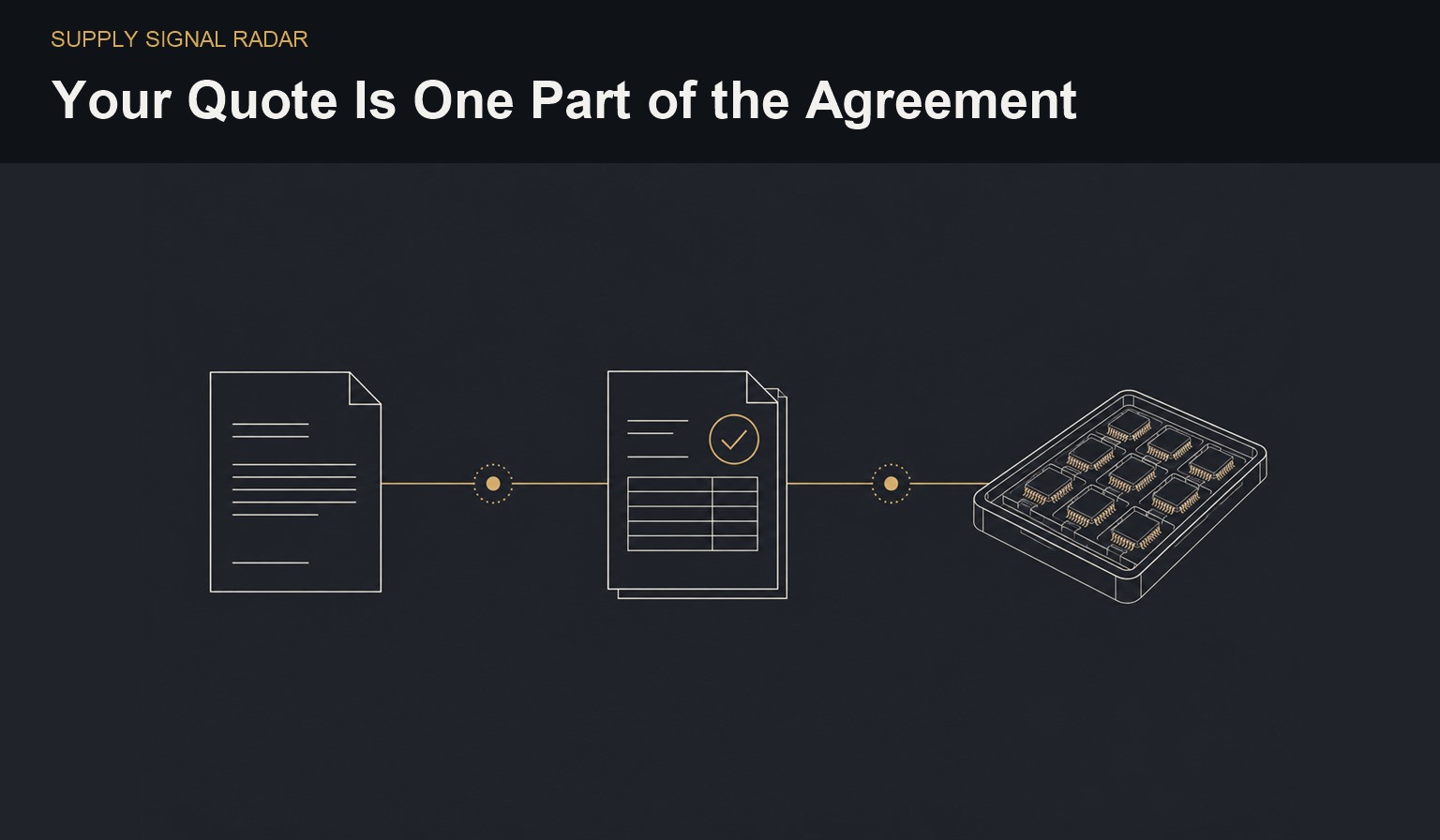
Amazon’s collaboration with Qualcomm gives a concrete example of a customer relationship extending beyond the purchase order. Qualcomm issued Amazon a warrant whose vesting depends on commercial arrangements, binding orders, and actual purchases of server chip products, technology, systems, and manufacturing services. The terms reference up to $60 billion in payments over the warrant period, which ends in September 2036.
That ceiling is not a guaranteed $60 billion order. The arrangement contains conditions and milestones. Initial purchase commitments caused part of the warrant to vest at issuance; the remaining economics depend on future activity.
The procurement significance is the incentive structure. The customer can gain equity benefits as the commercial relationship develops. The supplier gains a reason to build around a sustained customer program. Neither point establishes that other buyers have lost capacity or that a particular delivery is guaranteed.
A smaller buyer does not need to copy an equity arrangement. The practical lesson is to make the value exchanged in a supplier agreement explicit. If you offer a firmer forecast, a longer commitment, or less cancellation flexibility, identify what you receive in return. A longer forecast by itself does not specify priority, buffer stock, or recovery support.
Put those commitments beside the price in the sourcing comparison. A slightly cheaper quote with an unresolved delivery obligation can create work that the spreadsheet never prices.
Your Approved Processor May Get a New Owner
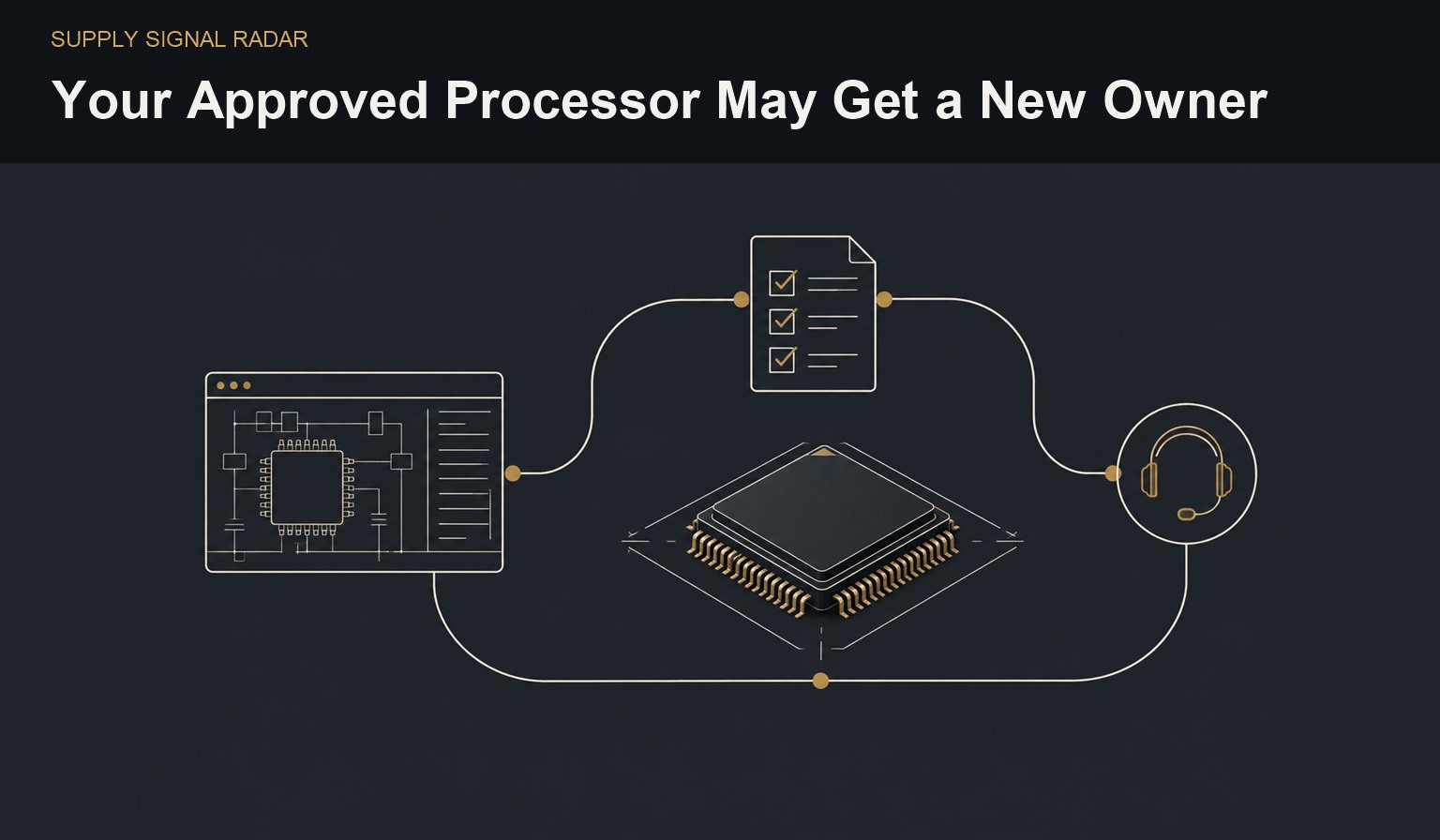
For teams using Alif processors, the immediate task is product continuity. Analog Devices agreed to acquire Alif for $1.35 billion in upfront cash, with up to $200 million in additional contingent consideration. The companies expect closing before the end of 2026, subject to the applicable conditions and approvals.
Alif’s silicon is already in production, with consumer and industrial design wins. Its microcontrollers and fusion processors would add digital processing capabilities to ADI’s analog portfolio. The proposed combination could give customers a broader range of components and support from one supplier. Those benefits remain expectations while the transaction is pending.
For an existing design, preserve the details that make the part usable: the approved revision, software support, qualification record, distributor route, and product-change notice process. Ask who will own those commitments through the transition. Keep the answer attached to the program rather than relying on the acquisition announcement to imply continuity.
An acquisition also does not automatically invalidate the existing part. There is no reason in this announcement alone to start a replacement design or assume an end-of-life notice. The useful action is to obtain a clear support path while the supplier organizations are preparing to combine.
For a new evaluation, compare the product roadmap with the planned release date of your own system. A promised future integration can be valuable, but qualification should be based on the hardware and software available for the program you intend to ship.
Foundry Growth Does Not Answer the Contract Question
If a supplier cites market growth while changing your terms, request the affected product range, effective date, and delivery condition behind the change. TSMC reported August revenue of NT$514.81 billion, up 10.1% from July and 53.3% from a year earlier.
That is a current measure of business activity. A monthly revenue total cannot identify the capacity available for a specific process, package, or customer order. Revenue can change with volume, pricing, and product mix. Use the result as context for a supplier conversation, then return to the commitments on the part you buy.
Broad industry growth is not enough to show that every part on an approved vendor list needs the same treatment.
The Qualcomm arrangement shows one way a large customer and supplier can align future incentives. The ADI transaction shows how ownership may change the support relationship around an existing design. TSMC’s results provide the demand context. None replaces a part-specific agreement.
Make the Commitment Visible Before Renewal
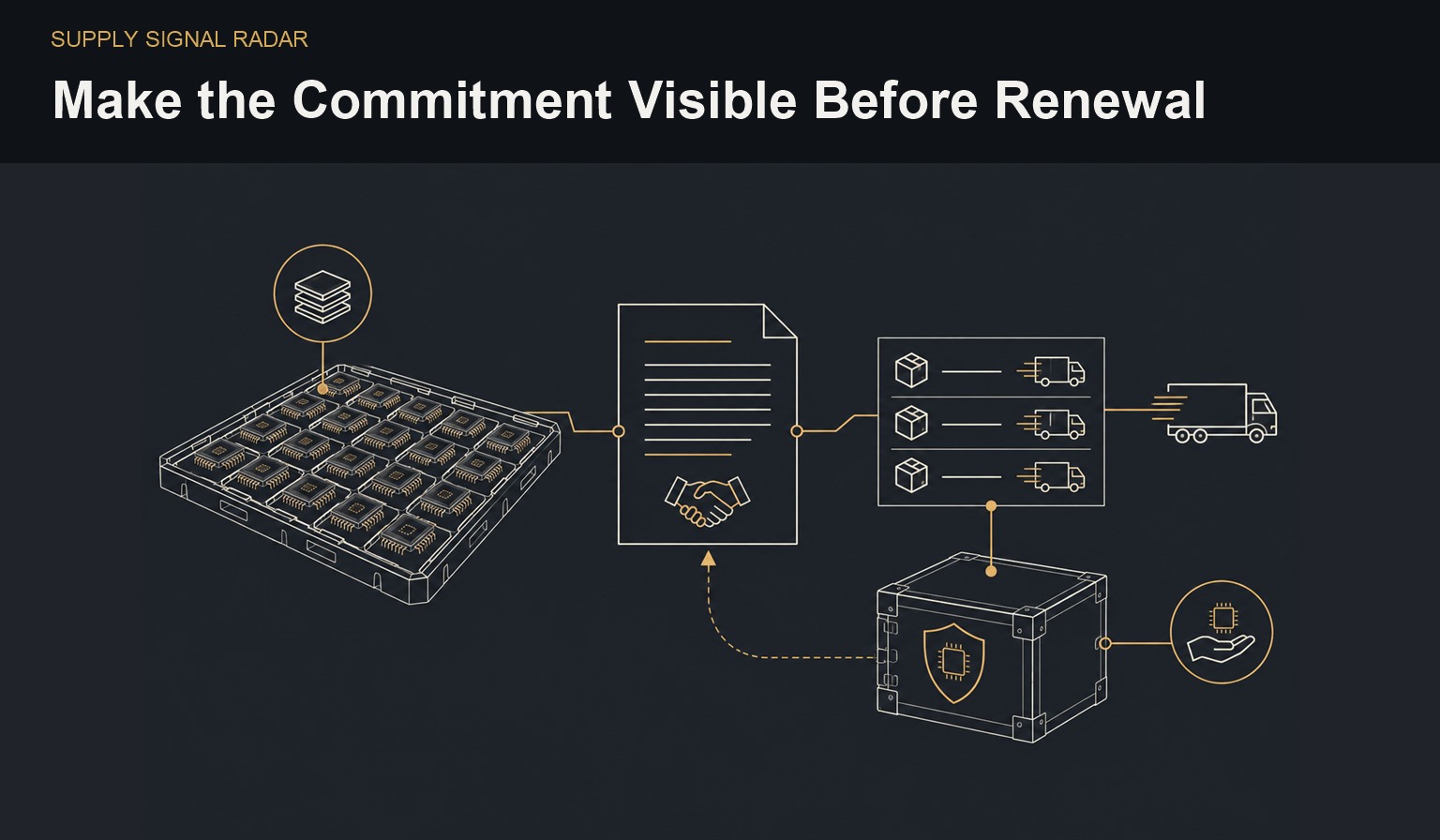
A supplier review often has the unit price, annual spend, and nominal lead time ready at the start. Add the commitments that make those numbers usable: which quantities are accepted, what cancellation terms apply, who holds the buffer, and what happens after a missed delivery.
Where a distributor is involved, distinguish the distributor’s promise from the manufacturer’s commitment. Record which party owns recovery and which party can approve a change. If a product is moving between owners, confirm that the escalation contact and change-notice process still reach the organization responsible for the part.
The aim is a short, usable record. It should tell the buyer what is protected, what remains conditional, and which exception requires action. That is more useful at a build review than the label “strategic supplier” without the terms behind it.
What to Watch For
- Qualcomm–Amazon commercial milestones. Binding orders and actual purchases will show how the conditional relationship develops. The maximum payment figure alone is not a shipment forecast.
- ADI–Alif closing and continuity notices. Confirmed changes to support, distribution, or product plans will matter more to an active design than the transaction’s headline value.
- Part-specific terms alongside foundry growth. Allocation notices and delivery commitments will show where demand is changing a buyer’s position.
- Gate-driver lead-time normalization. My standing question about normalization by the end of the third quarter remains open. TSMC’s revenue growth cannot resolve a product-level timing question.
What To Do This Week
- Add delivery protection to the price comparison. Record accepted quantity, committed date, cancellation terms, buffer ownership, and recovery responsibility.
- Match your commitment to a supplier commitment. If you offer better forecast visibility or a longer purchase horizon, state the supply or support benefit in the agreement.
- Check continuity for active Alif designs. Confirm the current support owner, approved revision, software path, and product-change notice process.
- Keep conditional deals out of booked-demand totals. Separate a commercial ceiling, an accepted purchase order, and delivered product in planning discussions.
The strongest relationship on a supplier slide may still leave the important terms unstated. Put those terms next to the part number. The agreement becomes useful when the buyer can say exactly what it protects.
Sources: Qualcomm–Amazon warrant terms; Analog Devices–Alif agreement; TSMC August revenue.
Related Episodes
- Your Supplier Relationship Needs More Than a Price.: Qualcomm and Amazon link incentives to purchase milestones; ADI plans to acquire Alif; TSMC reports August growth. Check what supplier agreements protect, and keep conditional ceilings separate from committed orders.